Showing posts with label opinion. Show all posts

Monday, October 20, 2014

In the Press: Professor Gordon Mathews's thoughts on the Umbrella Movement


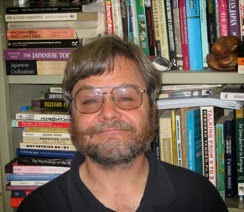
Professor Gordon Mathews.
Photo Credit: Mingpao Daily
Professor Gordon Mathews was interviewed by Mingpao Daily about his thoughts and observation on the Umbrella Movement. The article is in Chinese only.

「...作為人類學家,他最享受與在場的陌生人交談:『早幾天在旺角,看到不同立場的人正在理性辯論,你來我往,這正是我所嚮往的公民課堂!』他直言,為人師表不能鼓勵學生犯法,但他走入現場,同樣為履行教師職責:『人類學強調對不同觀點的理解,我正在做這件事。老師的責任是促進思考,令人們想得更透徹,所以每遇上持相反立場的人,我很樂意跟他們交談,甚至辯論!』...
...消弭中的香港價值,卻在街頭重現。『我從未見過有示威可以如此文明有禮。這或許誇張,但現場確有如社會主義下的烏托邦,有公眾書架鼓勵閱讀分享、有自修區讓學生溫習;人人都有手尾,自動自覺執拾;越過石壆又有人攙扶……若理想的社會主義者要找個地方借鏡,他們不應去內地,那只是愚蠢的獨裁!他們反而應該來看看現在的香港!』麥高登打趣說道。...」
Mingpao Daily, Sunday (19/10/2014), Full article (Chinese only) 

Wednesday, September 3, 2014

In the Press: Professor Gordon Mathews's thoughts on Occupy Central


Professor Gordon Mathews
Professor Gordon Mathews shared his thought on the Occupy Central movement on facebook earlier this week.  It not only sparked heated discussion, but also drew the medias' attention.


"I am deeply upset about the Chinese government's decision to deny democracy to Hong Kong, and just wrote this to Benny Tai: "Some of us who are not Chinese are very willing to engage in Occupy Central. However, we are worried that, as foreigners, and particularly as Americans, we will be playing into the Mainland's propaganda. We don't want to be involved if we would hurt the Occupy Central movement. What do you think we should do? Benny, feel free to respond privately if it seems more appropriate, if you can find time to do so-- " I'll see what he says! What do any HK or Chinese readers of this think? Would an American getting arrested help or hurt the Hong Kong democracy cause in the eyes of the Mainland? 
If CUHK classes are shut down at the end of September, I will support the student protesters--I will film all my classes and put them on-line, and make sure that no one who is arrested and jailed will academically suffer for it, although I will also do all I can to offer my class for those who want to attend, and who aren't participating in the boycott: this is strictly a matter of free, individual choice, all the more, of course, for the many students who are not from Hong Kong. But I am still unsure as to what to do myself..."
Professor Mathews (1/9/2014), Original text and corresponding discussion 

The original status and discussion.
Photo Credit: Professor Mathews's facebook


Professor Mathews's view was quoted in 3 local newspaper:


「佔中和罷課浪潮將至,每人在多重身份裏掙扎。中大人類學系系主任麥高登(Gordon Mathews)苦惱得在facebook向佔中發起人之一戴耀廷查詢,外國人可否佔中?會不會被北京抹黑為外國勢力干預?他指不同膚色亦是香港人,對我城匹夫有責。面對有學生表明罷課,他重回教師角色表明會繼續授課,會錄影課堂讓學生網上補課,又呼籲學系寬鬆處理罷課學生...」
Apple Daily, Local News (3/9/2014), Full article (Chinese only) 

 「...中文大學人類學教授Gordon Mathews表明,對人大常委會決議感到極為不滿,支持學生的罷課行動,更希望能參與佔中。不過,作為外籍學者的他憂慮,北京斥外國勢力干預,已去信佔中發起人戴耀廷,徵詢其意見...」 
Sing Tao Daily, Local News (3/9/2014), Full article (Chinese only)  

"...On Tuesday a department head at Chinese University said Occupy Central would be a legitimate reason to miss classes. Professor Gordon Matthews said he will provide filmed lectures to help students who join class boycotts in protest at Beijing's restrictive framework for the city's political reform..."
South China Morning Post, Politics (4/9/2014), Full article (English only) 
 

Monday, April 29, 2013

In the Press: Prof. Mathews Criticizes Hong Kong's Policies on Asylum Seekers


Banging African drums and chanting words such as “justice,” hundreds of asylum seekers and torture claimants marched from Central to the Immigration Tower in Wan Chai on 28 April 2013 to protest against what is deemed unjust screening procedures of UNHCR and the government.(To see the full report of the protest, please visit South China Morning Post.)Prof. Gordon Mathews and Prof. Sea-ling Cheng joined and supported the protest. 


Prof. Mathews supported the protest.
"The Hong Kong government, in its treatment of asylum seekers, is apparently trying to be humane. However, the effect of its policy is the exact opposite of what it intends, rewarding those who are most undeserving, and harming those who are most deserving." Prof Mathews diagnoses the problems of the current  system in the article Open and Shut Cases, written for South China Morning Post.

According to him, Hong Kong's policies appear to be reasonable, and they could become a model of effective, humane government, if comprehensive refugee policies were implemented, and the process was speeded up.


Prof. Sea-ling Cheng marched with asylum seekers.
One of the major problems is that the screening procedures of UNHCR and the government are inadequate, sometimes giving the undeserving refugee status, while denying the most deserving. They can also be unbelievably lengthy, taking five or more years to complete

He further points out how the current system serves for Hong Kong economy:

"The current system allows the Hong Kong government to deny permanent settlement to people it deems lack the skills to contribute to society, while providing the means to closely monitor the illegal population needed for the profit of many Hong Kong businesses.

If this is indeed the case, then it may be that the present shortcomings in policy towards asylum seekers in Hong Kong are not only matters of unforeseen consequences, but a matter of entirely foreseen intent. Could it be that the Hong Kong government actively seeks for its policy towards asylum seekers to fail?"

The current system provides the means to closely monitor the illegal population needed for the profit of many Hong Kong businesses.

Friday, April 26, 2013

In the Press: Gordon Mathews Says Biased Ranking Exercise Favours Research in English


Prof. Gordon Mathews wrote an opinion piece (Academics denied their place in debate on Hong Kong) for South China Morning Post, pointing out the significant problems of the Research Assessment Exercise in Hong Kong. The exercise,  imported from Margaret Thatcher's Britain, will rank different academic departments as to their research productivity and distribute funding accordingly.

The seemingly reasonable assessment favours research written in English and for Anglo-American publishers. As a result, although unintended, it renders humanists and social scientists no more than mute technocrats and bureaucrats instead of public intellectuals and makes Hong Kong universities increasingly resemble those of Singapore and mainland China.

Prof. Mathews said: "If I were a Chinese official in Beijing, I would be very happy that the exercise keeps Hong Kong academics publishing books and articles in distant places that few people read, rather than engaging in public debate through their research and publications on Hong Kong."

To read the full article , please click here.

Friday, April 12, 2013

How Skeptics and Believers Can Connect


T. M. Luhrmann, a professor of anthropology at Stanford and the author of “When God Talks Back: Understanding the American Evangelical Relationship With God,”discusses on
The New York Times how
skeptics and believers can have a better "marriage."
As political scientists Robert D. Putnam and David E. Campbell observed in the United State, “recent years have seen the sharpest points of disagreement between religious believers — of nearly all stripes — and those who denounce religious belief of all types.”(American Grace)

"Anthropologists have a term for this racheting-up of opposition: schismogenesis. Gregory Bateson developed the word to describe mirroring interactions, where every move by each side makes the other respond more negatively, like those horrible arguments with your spouse where everything you say makes the other person dig in their heels more fiercely, " Luhrmann said. "...one of the things that makes mutual respect between believers and nonbelievers difficult is that there is a kind of line in the sand, and you’re either on one side of it or on the other."
We are the power.
However, Luhrmann pointed out that believers and nonbelievers are not so different from one another. "When I arrived at one church I had come to study... I saw my own doubts, anxieties and yearnings reflected in those around me. People were willing to utter sentences — like 'I believe in God' — that I was not, but many of those I met spoke openly and comfortably about times of uncertainty, even doubt. Many of my skeptical friends think of themselves as secular, sometimes profoundly so. Yet these secular friends often hover on the edge of faith. They meditate. They keep journals. They go on retreats. They just don’t know what to do with their spiritual yearnings. "

Perhaps there is hope, as Luhrmann said. "Good marriages work because couples learn to repair, rather than escalate, their conflicts. Same-sex marriage and abortion should not be approached by drawing a line in the sand and demonizing everyone on the other side. We need to recognize something of what we share, and to carry on a conversation — and if we can keep the conversation going, we will, however slowly, move forward. If we can’t, we’re in real trouble. "

It applies not only to religious schismogenesis, but also political schismogenesis, and is probably relevant in other places outside America.

Tuesday, April 9, 2013

Understanding the Greek "Indignation" Anthropologically


Photo: Wikimedia Commons
What can anthropology contribute to the discussion about the financial crisis? Dimitrios Theodossopoulos at The University of Kent conducted an ethnographic study of Greek citizens during the financial crisis of 2011 in order to explore the causes and consequences of the rhetoric of discontent inspired by the austerity measures. While much of the coverage in the international media often centered on the public manifestations of the protest and the "indignation,"  the article looks at the perceptions and interpretative trajectories of ordinary Greek citizens, and their views about accountability for the country’s economic woes, which represent a persistent attempt to explain a massive crisis in locally meaningful terms.

The press-release preview of the paper in Current Anthropology commented:

"Theodossopoulos’s ethnography provides a fascinating look into the ways Greeks view themselves and others in the shadow of the crisis, and shows what an anthropological approach to contemporary economic issues can add to the international discussion by highlighting the complexity and meaningfulness of local responses to the crisis."


You can find this paper in the April issue of Current Anthropology. 

Saturday, March 30, 2013

Ask An Anthropologist about Marriage


In the articke Ask An Anthropologist about Marriage, Rosemary Joyce, professor of anthropology at UC Berkeley, commented that the counsel for the Prop 8 supporters "should have asked an anthropologist. "

Anthropologists always have a lot to say about marriage, given kinship is, after all, one of our historic, signature issues. "And that gives us something to say about the core claim by counsel for Prop 8," said Professor Joyce.

Especially when the counsel used the term "the age-old definition of marriage."
 
Professor Joyce said: "To an anthropologist, that sounds remarkably quaint. Whose age-old definition? Globally, the cultural tradition being argued is one among many..."  And she quoted from a statement by American Anthropological Association in 2004 which was inspired by a call for a constitutional amendment to enshrine that definition,
The results of more than a century of anthropological research on households, kinship relationships, and families, across cultures and through time, provide no support whatsoever for the view that either civilization or viable social orders depend upon marriage as an exclusively heterosexual institution. Rather, anthropological research supports the conclusion that a vast array of family types, including families built upon same-sex partnerships, can contribute to stable and humane societies.
There are plenty of ethnographies upholding this statement. As John Borneman and Laurie Kain Hart wrote in the Washington Post  in 2004,
What, then, about restriction of the legal bond of marriage to a man and a woman? Does marriage have to be heterosexual? The human record tells us otherwise. While the model of marriage is arguably heterosexual, the practice of marriage is not. In a broad spectrum of societies in Africa, for example, when a woman's husband dies, she may take on his legal role in the family, and acquire a legal "wife" to help manage the domestic establishment. This role of wife is above all social, and not contingent on her sexual relations. These societies, which practice heterosexuality, take this woman-woman marriage as commonsensical; they recognize that above all marriage functions socially to extend and stabilize the network of care.
In the end, she concluded: "If you are going to make a claim about universal human relations-- ask an anthropologist."


To read the full article, please click here.

Saturday, January 12, 2013

What Is Anthropology? This Is Anthropology!


What Is anthropology? This is probably the very question that bothers everybody in the field: freshmen, PhD students and even anthropologists. (Just think about the whole debate over whether anthropology is science.) It is even more so for people outside the descipline. Therefore, American Anthropological Association has established a website called "This Is Anthropology." On this website, you can learn more about the discipline of anthropology, use the interactive map to learn about anthropology projects in different parts of the world, explore the skills and careers anthropologists have, and find out how you can become an anthropologist. 

So what is anthropology? To cut a long story short, according to the Website, it is " the most humanistic of the sciences and the most scientific of the humanities."


Sunday, January 6, 2013

Steelcase's Anthropologist On Remaking Offices To Create Happier Workers


“You text, you Gchat, you hop on Facebook--why? To communicate. Soon you find yourself turning the phone off, going invisible, and signing out of your social networks--why? To get some privacy, to gain some focus. The need to text is new, while the needs to make contact--and to find privacy--are old. Same old human nature thrown into constantly new contexts.”

Donna Flynn
Donna Flynn, an anthropologist, directs Steelcase's WorkSpace Futures, a 19-member independent research group to understand how these timely (and timeless) trends shape the ways we work. "So how can we think holistically about creating sustainable work environments and work practices for our people?" Flynn says.

To read more about how what are the changes of our workplaces, how they are affecting our well-being, and how an anthropologist makes contributions to these issues, please see the original article on Fast Company. 

Thursday, January 3, 2013

How Law Matters to the Taiwanese Police


How social forces are channeled into legal institutions? In the article  How Law Matters to the Taiwanese Police on Anthropology News. Jeffrey T Martin illustrates a cultural approach to this question with his ethnographic study on Taiwanese policing. Two years ago, he gave a related talk in our department on the historical formation of modern policing in Taiwan under Japanese colonial and Chinese authoritarian governments, exploring how this policing system has adapted to the island's democratic transition.

"When the police patrolmen I knew in Taiwan reflected on their experience working as agents of law enforcement, they frequently invoked a cultural ideal of balance between three primordial qualities of human sociality: qing (sentiment), li (reason) and fa (law). It was a defining idiom of their job, an idiom pedigreed by a thousand-year-old jurisprudential tradition and expressed in modern form through textbook techniques taught in the police college. "

Police propaganda billboard advertising goals for building a “Peaceful and Healthy Society.” This photograph was taken in Taiwan in the early 2000s. Photo courtesy Jeffrey T Martin

* Jeffrey T Martin is a cultural anthropologist working in the sociology department at the University of Hong Kong. He runs a policing seminar in Hong Kong that aspires, among other things, to contribute to the development of a comparative anthropology of policing (see www.policingstudiesforum.com).