Showing posts with label seminar. Show all posts

Monday, September 25, 2017

[Friday Seminar Recap] The Politics and Ethics of Patriarchy in 21st century China: A Conversation about Sex, Family, and Power


Date: September 15th 2017 (Friday)
Speakers: Petula S. Y. HO (何式凝) (Social Work, HKU)
Teresa KUAN (關宜馨) (Anthropology, CUHK)
Gordon MATHEWS (麥高登) (Anthropology, CUHK)
Gonçalo SANTOS (江紹龍) (HKIHSS, HKU)
Moderator: Minhua LING (凌旻華) (China Studies, CUHK)


Chinese society has been radically reshaped by the successive waves of revolutions since the 19th century. Patriarchy, which defined the familial social structure for a very long period in Chinese history, seems to be altered or even reversed. Is patriarchy “dead”, or is it still relevant for understanding power and intimate life in contemporary China? Discussing the book Transforming Patriarchy: Chinese Families in the 21st Century, Prof. Ho, Prof. Kuan, Prof. Mathews and Prof. Santos shared their views in the Friday Seminar titled “The Politics and Ethics of Patriarchy in 21st century China: A Conversation about Sex, Family and Power”.

Prof. Santos started by stating that he finds it important to bring family and intimate life back into the focus of research on contemporary society and investigate their intertwinement with institutions and technologies. He then examined and critiqued the theoretical “enemies”: two previous theories of the transformation of families, i.e. modernization theory and individualization theory. Modernization theory argues that as industrialization spreads, there is a shift from the patriarchal family to the nuclear family, in which more emphasis is put on companionship and romantic love, leading to a more egalitarian mode of intimate life. The individualization thesis, as a successor, highlights how intimate relationships have been privatized and become thinner, more fragile and liquid in the age of globalization. Prof. Santos pointed out that these theses assume the change to be linear, and overstate the importance of individual agency, without articulating clearly the link between individual choice, state policies and global forces.

As an alternative, in Transforming Patriarchy, it is argued that the rising significance of romantic love, conjugal units and individualized intimacy should be conceptualized as the transformation of patriarchal inequalities, rather than the end of them. Based on the Chinese context, Prof. Santos discussed a spatial-temporal model of domestic inequality, which includes two key axes: generation and gender. Furthermore, this system is not historically constant but subject to the influence of extra-domestic forces in the surrounding environment. Prof. Santos argued that while the classic patriarchal structures have been effectively shaken in contemporary China, the growing salience of individual choice in people’s private life does not equal to absolute freedom from social ties, institutional constraints and normative intervention. The focus should be two-fold. In the end, Prof. Santos looked into the case of Ma Rongrong, a pregnant Chinese woman who committed suicide presumably due to unbearable labor pain after being denied a C-section, and discussed the relationship between birth-giving, authority of hospitals and power of the husband’s family.

Other speakers at the Seminar all gave insightful comments. Prof. Ho discussed the various forms of patriarchs from a Hong Kong perspective and emphasized the interplay of gender and macro politics. Prof. Kuan went into the details of Transforming Patriarchy and pinpointed a contradiction: the forces that constraint and compel are also those that create meaning and generate affection. Prof. Mathews compared the cases of China and Japan from the perspectives of generation wealth difference, state intervention and economic prospect.

A full house!

Prof. Ho

Prof. Kuan
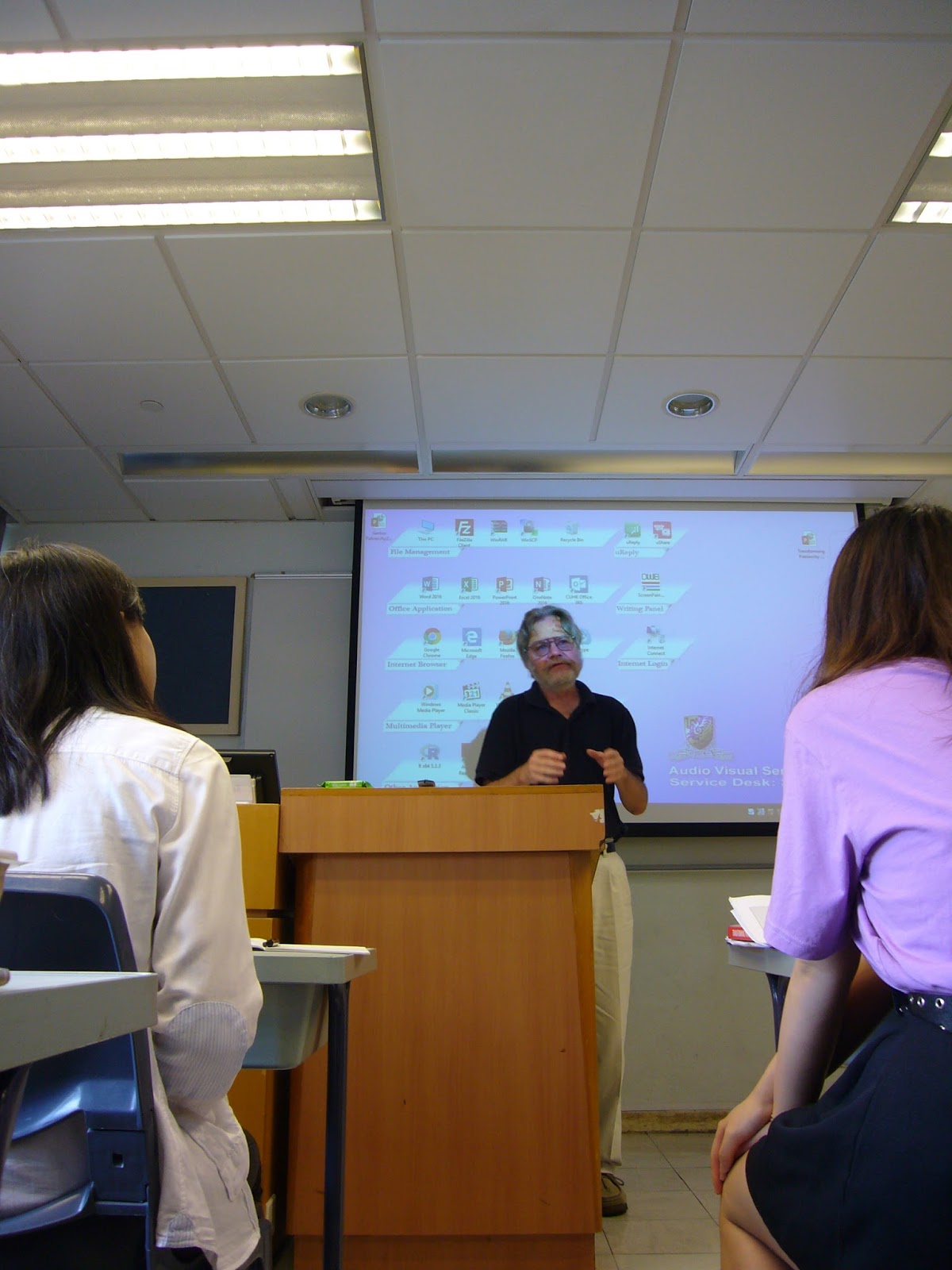
Prof. Mathews

Prof. Santos

Tuesday, March 7, 2017

[Upcoming Seminar] Circulating “Debts” Among Friends: The Business Practices and Communality of Tanzanian Dealers in Hong Kong and China


Title: Circulating “Debts” Among Friends: The Business Practices and Communality of Tanzanian Dealers in Hong Kong and China 
Speaker: Sayaka OGAWA (Associate Professor, Graduate School of Core Ethics and Frontier Sciences, Ritsumeikan University)
Date and time: 10 March 2017, 1:00p.m.-2:30p.m.
Venue: Room 115, Humanities Building, New Asia College, CUHK

************************************************************

In her Philosophy of Debt (2014), the French philosopher Nathalie Sarthou-Lajus advocates the reinstatement of “debt.” “Debt” is generally considered to be negative. We are reluctant to be indebted to others, and glorify living on our own without being in debt. However, Sarthou-Lajus points out that this very idea is at the root of the problems of our capitalistic economy. This presentation shows how Tanzanian dealers circulate "debt" and "indebtedness" among themselves and various customers in African countries through electronic money-sending services and SNS on mobile phones in order to pursue commercial transactions and construct their own communality. Based on this, I argue for the possibility of a voluntary and independent system of “debt without repayment obligation” that is different from Sarthou-Lajus’s ideas. I show the potential of a new system of debt circulation arising out of the gray zone of nations, namely, the pirate arena in the heart of the capitalistic economy rather than in governmental social welfare. 

Sayaka Ogawa is an associate professor of the Graduate School of Core Ethics and Frontier Sciences, Ritsumeikan University, Japan, She has specialized in African area studies and cultural anthropology. Her research theme is exploring how marginal people can construct their own life-world while adapting to the logic of global capitalism, and how they can build their own communality for mutual security while respecting autonomy and heterogeneity. Her book The Art of Surviving in the City (in Japanese, 2011) explored the unique business practice and communality of street traders in Tanzania by focusing on street-wise cunning. This book won the 33th Suntory Prize for Social Science. Now she is trying to reveal global distribution systems of second-hand goods and copy products in order to discuss contemporary consumption culture.

A light lunch will be served at 12:30 pm. First come first served.

All interested are welcome!


Thursday, March 2, 2017

[Cultural Heritage Talk Series 2016: Recap] Imagining Angkor: Politics, Myths, and Archaeology


Imagining Angkor: Politics, Myths, and Archaeology 
(想吳哥治、與考古)

Speaker: Prof. Miriam Stark (Department of Anthropology, University of Hawaiʻi at Mānoa)
Time: 4:00 - 6:00 pm, 14th October, 2016 (Friday)
Venue: Lecture Theatre (L1), Institute of Chinese Studies, CUHK

Text: Sarah Chong (Research Assistant)

Angkor, as the capital city of the Khmer Empire for several centuries, has been mysterious and alluring in the eyes of many people. On 14th October 2016, our department and the Centre for Cultural Heritage Studies invited Prof. Miriam Stark from the Department of Anthropology, University of Hawaiʻi at Mānoa to give a public lecture on Angkor, helping to unveil the mystery of this place. The public lecture was co-organized by the Institute of Chinese Studies, Chiang Ching-kuo Asia-Pacific Centre for Chinese Studies, and the École française d'Extrême-Orient (EFEO). The history of Khmer Empire and Angkor, dating back to the 9th century all the way to the 15th century, have been the study interest of scholars of different fields. Prof. Stark adopted a historical approach to present her arguments and highlighted the importance of Angkor as a cultural heritage. Three major topics—politics, myths and archaeology—were discussed in the talk.

Prof. Miriam Stark giving the public lecture
Angkor is “intrinsically political”, as Prof. Stark described. It has been regarded as a representation of the entire country. Angkor Wat was always the key element on the national flags of Cambodia in different regime—from the flag of the French Protectorate of Cambodia starting from the Mid-19th century, to the flag of the Kingdom of Cambodia between 1950 and 1970 and the flag of the Democratic Kampuchea (the period of the Khmer Rouge). Prof. Stark emphasized that even today Angkor Wat has an important role to play not only in the national flag of Cambodia, but also in people’s everyday life. For instance, the image of Angkor Wat as well as the slogan “My Country, My Beer” can be found on the packaging of one of the most popular beer brands in Cambodia.

The myths of Angkor have also framed the ways people view the past of Cambodia. In her talk, Prof. Stark discussed how Angkor has been imagined or interpreted by different groups of people. The European, as the outsiders, tend to portray Angkor with the image of Angkor Wat. The Musée Guimet in Paris has significant collections of the Pre-Angkorian and Angkorian artifacts and the replicas of Cambodian ancient temples’ fabrics. The Khmer, as the insiders, link up Angkor with different symbolic meanings. For the locals, Angkor is the key of their national identity and the sacred place of religion. Even when the Cambodian people moved to the refugee camp in Philippine during the Khmer Rouge regime, they built the model of Angkor Wat there, reflecting the importance of Angkor to them. Angkor, being a basic component of the Khmer identity, has significant influence on how people define Cambodia as well as how the Cambodian define their nation state.

“If you want to understand Angkor, you must do archaeology,” Prof. Stark said. Prof. Stark emphasized how archaeology plays its role in reconstructing the picture of Angkor. Archaeological research helps to reveal the history of Cambodia from the early historic period (500 BCE), to the Pre-Angkorian period (500 CE), as well as the Angkorian period (1000 CE) and the collapse of Angkor (1500 CE). Prof. Stark also talked about the Greater Angkor Project III, which is a collaboration of various institutes. The project sheds light on the Angkorian urbanism in different periods. Prof. Stark shared her experience of participating in the project, with a special focus on the archaeological research on people’s lives in the past, including their residential pattern, where they lived and how they used the space.

The audience
People from different countries are doing archaeological research in Cambodia now. Prof. Stark pointed out that development is an opportunity for the country but at the same time a very big challenge to Cambodia’s archaeological record. Fortunately, the Ministry of Environment and other stakeholders have been working together to ensure the protection of heritage and the continuous development of economy.

Tuesday, February 28, 2017

[Upcoming Seminar] Multiculturalism Reconsidered: A Theoretical Perspective on East Asia’s Reality


Title: Multiculturalism Reconsidered: A Theoretical Perspective on East Asia’s Reality
Speaker: Masaki TOSA (Professor, School of Asia 21, Kokushikan University)
Date and time: 3 March 2017, 1:00 – 2:30 pm
Venue: Room 115, Humanities Building, New Asia College, CUHK

************************************************************

I have been engaged in a comparative study of multiculturalism in East Asia, particularly in six global cities including Hong Kong, Singapore, Shanghai, Taipei, Seoul, and Tokyo. I will present the tentative results of my research and set forth a basic theoretical framework. My argument is that nationalism is a very important reference point to understand multiculturalism in East Asia. In order to discuss this in a compact way, I will rely on Liah Greenfeld's “nationalism trilogy.” 

Masaki Tosa is a Professor at the School of Asia 21, Kokushikan University, Japan, and Hon. Adjunct Professor at the Department of Anthropology, CUHK. He has been engaged in area studies of East Asia as a cultural anthropologist. His main areas of research include nationalism and globalization, pop culture, and multiculturalism.

All interested are welcome!


Thursday, February 23, 2017

[Public Lecture] Trumping Sex: Scandals, Sleights of Hand, Politics


Trumping Sex: Scandals, Sleights of Hand, Politics

Speaker: Carole Vance (Professor of Anthropology, Columbia University)
Date and time: 17 March 2017, 12:30pm–2:15pm
Venue: Lecture Theatre 2, Mong Man Wai Building, CUHK


Speaker's Profile 

Carole S. Vance is a Professor of Anthropology at Columbia University in New York City, where she teaches and writes about sexuality, human rights, science, gender, and health. She coordinated the landmark Barnard Conference on Sexuality and edited Pleasure and Danger: Exploring Female Sexuality. Vance founded, and for ten years directed, Columbia’s innovative Program for the Study of Sexuality, Gender, Health, and Human Rights, funded by the Rockefeller Foundation, which aimed to advance research, as well as facilitate exchange between researchers and advocates on sexual health and rights issues. Professor Vance has taught and mentored researchers and activists in many international settings, including India, Istanbul, the Netherlands, China, and Vietnam. Vance’s recent work focuses on trafficking into forced prostitution, issues of consent and state regulation, and the current initiatives to stop sexual violence on US campuses. Vance has received the David R. Kessler Award and the Simon and Gagnon Award for contributions to sexuality studies. She has been a member of many activist groups including No More Nice Girls and the Feminist Anti-Censorship Task Force.

All interested are welcome!

Wednesday, February 22, 2017

[Friday Seminar Recap] Post-Toyotist Affect: Japanese Workers Working On Neoliberal Reforms


Post-Toyotist Affect: Japanese Workers Working On Neoliberal Reforms

Speaker: Nana GAGNÉ (Assistant Professor, Department of Japanese Studies, The Chinese University of Hong Kong)
Time: 1:00 – 2:30 pm, 10 Feb 2017 (Friday)
Venue: Room 115, Humanities Building, New Asia College, CUHK

The pursuits of stability and security have been the orientation of many Japanese and Japanese corporations since the post-war period. In recent decades, the state and corporations started to promote neoliberal reforms in an attempt to “correct” Japanese capitalism. To explore more about the neoliberal restructuring in Japan and its influence on Japanese employees, our department invited Prof. Nana Gagné to give a seminar on “Post-Toyotist Affect: Japanese Workers Working On Neoliberal Reforms” on Feb 10.


Prof. Nana Gagné
Prof. Gagné discussed two major issues in the talk——how neoliberal restructuring had affected Japan’s particular postwar relationship between welfare, corporations and individuals (i.e. the post-war Japanese system of “welfare corporatism”); and what restructuring had done to individual workers and their subjectivity, as corporate culture was transformed and rearticulated with new forms of organization, evaluation, and governance.

Neoliberal reforms had brought in deregulations of non-regular employment, discretionary work, and a new merit system that emphasized “management-by-objectives”. By promoting American-style management practices and performance-based strategies, it was intended to train up a group of “strong individuals”, in contrast to the “company man” enculturated in the past. But in practice, neoliberal restructuring was imbricated with complex realities of historical trajectories and local contexts. As a result, a number of unintended consequences arose. For instance, employees became defensive, stopped building companionship with colleagues, and had worsen workplace relationships. The liberation and flexibility introduced by the reforms, representing the best interest of the companies, in the eyes of the employees were alienating and dehumanizing.

The audience
As Prof. Gagné concluded, the emergence of a “post-Toyotist affect” revealed new kinds of alienation based on quantified output. The restructuring efforts did not produce a new discourse that enabled the transvaluation of older values into new values. Rather, the de-coupling of employment structures and individual stability led to an ambivalent nostalgia for the previous management style.

Tuesday, February 21, 2017

[Upcoming Seminar] ‘The People Here Don’t Cook’: ‘Good Food’ in the Eyes of Ecological Farmers and Consumers in Shanghai


Title: ‘The People Here Don’t Cook’: ‘Good Food’ in the Eyes of Ecological Farmers and Consumers in Shanghai
Speaker: Leo PANG (PhD Candidate, Department of Anthropology, SOAS University of London)
Date and time: 24 February 2017, 1:00p.m.-2:30p.m.
Venue: Room 115, Humanities Building, New Asia College, CUHK

************************************************************

The rampant food safety scandals and environmental pollution affecting the Chinese food supply has given rise to a new breed of farmers, who gave up white collar jobs in the city to return to peri-urban farmland to grow produce without using synthetic fertilisers, herbicides and pesticides. When their produce does not sell at markets, they often justify their poor sales by referring to the lack of people who cook in the area as the main cause. This complaint reflects the farmers’ perception of home cooked food as “good food," as they believe that knowing the origins of produce makes the food more reliable and therefore better than food consumed outside the home. The shared belief in what constitutes “good food” between consumers and farmers, and the willingness of consumers to pay for ecological food as well as their appreciation of the farmers' efforts, strengthens the bonds between them. 

Leo Pang is a PhD Candidate in the Department of Anthropology at SOAS, University of London. He works on ecological food and farmers’ markets in Shanghai, as well as restaurants and cuisine in Australia and Hong Kong.

All interested are welcome!


Monday, February 13, 2017

[Upcoming Seminar] Migration and Development in Africa’s Urban Spaces


Title: Migration and Development in Africa’s Urban Spaces
Speaker: Oliver BAKEWELL (Associate Professor and Senior Research Officer, International Migration Institute, University of Oxford)
Date and time: 17 February 2017, 1:00p.m.-2:30p.m.
Venue: Room 115, Humanities Building, New Asia College, CUHK

************************************************************
This paper will look at different aspects of the changing relationship between migration and African cities, highlighting points of comparison and contrast with other regions of the world. Over the last century, rural-urban migration has played a major part in the development and growth of African cities, stimulating many debates about people's changing cultural values and social practices as they move to urban areas. This paper will explore two aspects of migration that have not been much considered. First, there is the role of cities as gateways into global markets, which rely on the mobility of African traders across the globe, most notably to China in recent years. Second, there is the movement across Africa that is creating distinctive 'foreign' populations to be found in cities in every part of the continent. Despite (or perhaps because of) having no policy, 'integration' is taking place and people are becoming part of new societies, contributing to the diversity and dynamism of many African cities. 

Oliver Bakewell is Senior Researcher at the International Migration Institute (IMI) and Associate Professor in the Department of International Development at the University of Oxford. His work focuses on the intersections between migration and mobility and broader processes of development and change, with a particular empirical focus on migration within Africa.

All interested are welcome!


Wednesday, February 1, 2017

[Upcoming Seminar] Film Screening of "Becky's Journey" & Talk by Sine Plambech


Film Screening of "Becky's Journey" & Talk by Sine Plambech

Speaker: Sine Plambech (Postdoctoral Fellow, Danish Institute for International Studies, Denmark)
Date and time: 7 February 2017, 12:30p.m.–2:00p.m.
Venue: Room 401, Humanities Building, New Asia College, CUHK

************************************************************

About The Film:

Becky is a 26 year old Nigerian woman who wants to go to Europe to sell sex. She already tried twice. The first time she was stopped with fake documents in the airport in Nigeria, by immigration authorities. This made her decide to begin a deadly journey through the Sahara desert hoping to embark on a migration boat bound for Italy. The film is about migration, sex work and human trafficking seen from the perspective of Becky. Through interviews with Becky and sequences of everyday life, we sense the feelings of limbo and immobility that permeate Becky’s life.

About The Speaker:

Sine Plambech is a Postdoctoral Fellow at the Danish Institute for International Studies, Denmark.

All interested are welcome!


Thursday, January 26, 2017

[Upcoming Seminar] Mobilising Concern - The Ethical Challenges NGOs Face in Visually Representing Social Problems


Title: Mobilising Concern - The Ethical Challenges NGOs Face in Visually Representing Social Problems
Speaker: Robert GODDEN (Director, Campaigns and Communications, Rights Exposure)
Date and time: 3 February 2017, 1:00p.m.-2:30p.m.
Venue: Room 115, Humanities Building, New Asia College, CUHK

************************************************************

Charitable organisations working on social problems such as human rights and poverty need to raise concern and mobilise action amongst the public in order to have impact. To do so often requires them to visually represent the suffering of 'distant others'. This presents them with a number of strategic and ethical challenges in how to present complex problems, communicating the need for action, yet not dehumanise, disempower, or stereotype communities and populations. Existing power relationships between those who picture/communicate the problems and those who experience them are sometimes complicated by historical colonial relationships. This talk will look at some of the challenges NGOs face in their visual communications, and ask how they can be effective and at the same time avoid ethical pitfalls? 

Robert Godden is a human rights campaigner specialising in visual communications. He is currently the Director of Campaigns and Communications at Rights Exposure, a consultancy focussing on the rights of migrant workers. Previously he was the Asia-Pacific Campaign Coordinator at Amnesty International. 

All interested are welcome!


Thursday, January 19, 2017

[Upcoming Seminar] Sex, Disability and the Ethics of Engagement


Title: Sex, Disability and the Ethics of Engagement
Speaker: Don Kulick (Professor, Uppsala University, Department of Cultural Anthropology and Ethnology, Sweden)
Chairperson: Prof. Hsun-hui Tseng (Assistant Professor, Gender Studies Programme, The Chinese University of Hong Kong)
Date and time: 25 January 2017, 12:30p.m.-2:00p.m.
Venue: Room 502, Wong Foo Yuan Building The Chinese University of Hong Kong

************************************************************

Abstract:
The talk will present findings from Loneliness and its Opposite a recent comparative study of sexuality and disability in Sweden and Denmark (Kulick and Rydström 2015). The speaker will discuss how the sexual lives of adults with significant disabilities are facilitated in Denmark, and how they are impeded in Sweden. The speaker will argue that access to sexuality for disabled people is not a right; it is an issue of fundamental social justice.

Mini-biography:
Kulick is Distinguished University Professor of Anthropology at Uppsala University in Sweden, where he directs a large research program titled “Engaging Vulnerability”. He has conducted long-term fieldwork in Papua New Guinea, Brazil, and Scandinavia, and has published in a number of fields, including linguistic anthropology, sexuality and gender studies, and disability studies. His books include Travesti: sex, gender and culture among Brazilian transgendered prostitutes (1998); Taboo: sex, gender and erotic subjectivity in anthropological fieldwork (1995; with Margaret Willson); Fat: the anthropology of an obsession (2005, with Anne Meneley); Language and Sexuality (2003, with Deborah Cameron); and Loneliness and its Opposite: sex, disability and the ethics of engagement (2015, with Jens Rydström).

Online registration: https://goo.gl/zTDBgV.

All interested are welcome!


Tuesday, January 17, 2017

[Upcoming Seminar] Applying Anthropological Methods in the Design Thinking Process


Title: Applying Anthropological Methods in the Design Thinking Process
Speaker: Charles Shih Hsiang SUNG (Assistant Professor, College of Management and the Integrated Program Of Innovation and Entrepreneurship, National Sun Yat-Sen University; Founder of Anthropologists for the Future)
Date and time: 23 January 2017, 1:00 – 3:15 pm
Venue: Room 12 Humanities Building, New Asia College, CUHK

************************************************************
Design thinking is a tool developed by a world-famous design company “IDEO” and has become one important tool for solving problems in social and commercial fields. It includes five important steps (Empathy, define, ideate, prototyping, and prototype testing), three evaluation standards (viability, desirability, and feasibility), and two thinking principles (divergent thinking and convergent thinking). As IDEO claims that anthropologists are beneficial to design thinking process, anthropologists in academic still lack understanding to it and ignore our strengths in design process. In this workshop, I will introduce how to apply anthropological methods in design thinking process and how to issue a design project based on anthropological concerns. Anthropologists are familiar with conducting participant observation and interviews with empathy in fieldwork. This is important and helpful to design thinking process. However, anthropologists usually ignore the creativity we own. In the workshop, I will also introduce how to inspire creativity and develop insights based on anthological perspectives. 

Charles Shih Hsiang Sung is an Assistant Professor teaching material culture anthropology and design thinking in the Integrated Program of Innovation and Entrepreneurship, National Sun Yat-sen University. He and his partner are promoting the application of anthropological perspectives and ethnographical methods outside the academic by building a team and the Facebook Page "Anthropologists for Future (百工裡的人類學家)". They organize online anthropological knowledge sharing and offline activities for people who are outside anthropological academic circle but interested in its application. He believes that anthropologists can work with different fields because they all expect a better future based on humanity values.

ALL INTERESTED ARE WELCOME! 

(A light lunch will be served at 12:30 pm. First come first served.)

Monday, January 16, 2017

Friday Seminars Schedule (Spring 2017)


The Friday seminars schedule of this semester has been announced! Don't forget to mark down the seminar dates on your calendar!

Most of the seminars in this semester will take place at 1:00P.M.–2:30P.M. at Room 115, Humanities Building, CUHK*. A light lunch will be served at 12:30pm.

We look forward to seeing you at the seminars!

(*Note that particular seminars will be held in other places.)


Tuesday, January 3, 2017

[HKAS seminar] Familiar Strangers: Social Media and the Outsider in Chinese Kinship


Title: Familiar Strangers: Social Media and the Outsider in Chinese Kinship
Speaker: Tom McDonald (Assistant Professor, Department of Sociology, The University of Hong Kong)
Date and time: 18 January 2017, 7:00 p.m.
Venue: Lecture Hall, Ground Floor, Hong Kong Museum of History, 100 Chatham Road, Tsim Sha Tsui

************************************************************


Anthropological accounts of social relations within Chinese society have traditionally viewed both kinship and familiarity as the basis of relationships between persons, which has inevitably led to the exclusion of strangers from the majority of attempts to theorize such relations. This lecture draws on ethnographic evidence collected during 15 months of fieldwork studying the impact of social media use in a rural Chinese town, which revealed the nature of these novel relationships with strangers which are facilitated by social media, showing how these encounters need to be understood in relation to the specific rural context in which participants reside.

Through these ethnographic cases and observations, this lecture will argue that participants do not position strangers that they meet on social media outside of their network of social relations. Instead, the mediatized relationships offered by social media come to represent a ready source of potential friends with whom they are both eager and willing to interact. On occasion, it is actually these strangers who individuals feel they can most easily confide in, and share intimate feelings – or experiences – with.

This lecture will thus conclude by arguing that improved models for understanding Chinese social relationships are needed, which are capable of understanding the stranger as integral, rather than antithetical to sociality.

Following the talk, you are invited to a self-paying dinner with the speaker. For more information, please contact Stan Dyer on 9746 9537 or anthrohk@gmail.com, www.cuhk.edu.hk/ant/hkas, www.facebook.com/hkanthro.


Friday, December 2, 2016

[HKAS seminar] When the Sun Sets in the Land of the Rising Sun: Psychoanalytic Theory and Sexual Behavior in Japan


Title: When the Sun Sets in the Land of the Rising Sun: Psychoanalytic Theory and Sexual Behavior in Japan
Speaker: Jermaine R. Gordon-Mizusawa (PhD candidate, Department of Anthropology, The Chinese University of Hong Kong)
Date and time: 8 Dec 2016, 7:00 p.m.
Venue: Lecture Hall, Ground Floor, Hong Kong Museum of History, 100 Chatham Road, Tsim Sha Tsui

************************************************************

Information on sex in Japan especially in the media is conflicting and contradictory. One image is sexualized with soaplands, enjo-kosai or compensated dating, and erotic manga; while another is of sexual repression. In 2008, Japan Today reported the lowest in frequency of weekly sex (34%) and sexual satisfaction (15%). The Guardian's Abigail Haworth in 2013 alarmingly claimed that young people in Japan have stopped having sex altogether, and Business Insider (2015) characterized Japan as experiencing “celebacy syndrome”. However, a BBC “Sex in Japan” documentary in 2008, and in 2015 a series of “special reports” on JK (Josei Culture or compensated dating with adolescent girls) by VICE News and reports in the Japan Times about “high school walking” say otherwise. 

Mr. Gordon-Mizusawa provides an anthropological and psychological analysis of sexual behavior in Japan by examining over 10 years of ethnographic interview data collected by the speaker, focusing particularly on first sexual experiences and subsequent behavior. He also looks at how Western media and academia portray sexual behavior in Japan and explores the meaning of “virginity” as a culture-bound phenomenon. Audience members will also participate in interactive activities during the talk. 

Jermaine R. Gordon-Mizusawa is a PhD candidate in the Department of Anthropology at The Chinese University of Hong Kong. His reseach interests include first-sexual experience and sexual behavior in Japan and East Asia using person-centered ethnography, psychoanalytic interview techniques and psychoanalytic theory. He is also interested in child and human development. 

Following the talk, you are invited to a self-paying dinner with the speaker. For more information, please contact Stan Dyer on 9746 9537 or anthrohk@gmail.com, www.cuhk.edu.hk/ant/hkas, www.facebook.com/hkanthro.


Thursday, December 1, 2016

[Upcoming Seminar] The Price of Belief: Money, Effort, and Reciprocity in Japanese New Religions


Title: The Price of Belief: Money, Effort, and Reciprocity in Japanese New Religions
Speaker: Isaac GAGNE (The University of Hong Kong)
Date and time: 2 December 2016, 1:00 – 2:30 pm
Venue: Room 11 Humanities Building, New Asia College, CUHK

************************************************************

This talk draws on fieldwork with new religious movements in Japan. Through a case study of two groups I look at the “price of belief” in terms of the monetary, social, and emotional efforts of members. I examine how new socioeconomic pressures on religious organizations have pushed new demands onto members to "materialize" their belief, which has also produced creative and unintended responses by members. In this process, the transvaluation of monetary and personal commitment via a materialization of belief underlies and reinforces members’ commitment while creating new webs of obligation and reciprocity. 

Isaac Gagné is a Visiting Assistant Professor at The University of Hong Kong's Department of Japanese Studies. He works on religion, morality, mental health, gender and identity in Japan.

ALL INTERESTED ARE WELCOME! 

(A light lunch will be served at 12:30 pm. First come first served.)


Wednesday, November 23, 2016

[Upcoming Seminar] Mobile Money and Migration in Shenzhen


Title: Mobile Money and Migration in Shenzhen
Speaker: Tom McDONALD (The University of Hong Kong)
Date and time: 25 November 2016, 1:00 – 2:30 pm
Venue: Room 11 Humanities Building, New Asia College, CUHK

************************************************************

This talk outlines the preliminary findings of new research on the use of mobile money amongst migrant workers in Shenzhen. In a short amount of time, mobile money platforms have gone from non-existent to being seemingly ubiquitous in the city’s migrant enclaves. This talk will discuss how mobile forms of payment can provide anthropological insight on the changing relationships and behaviours of this mobile population, in addition to asking what anthropological challenges are posed by the emergence of digital money in China. 

Tom McDonald obtained his PhD from the Department of Anthropology, University College London. His first monograph, Social Media in Rural China: Social Networks and Moral Frameworks (UCL Press) details the results of 15-months of ethnographic fieldwork examining social media use in the Chinese countryside as part of the UCL Why We Post project, an ERC-funded comparative ethnographic study on the use and consequences of social media around the world. He also coauthored the comparative volume How the World Changed Social Media (UCL Press). He is currently undertaking research on Mobile Money and Migration in China.

ALL INTERESTED ARE WELCOME!

(A light lunch will be served at 12:30 pm. First come first served.)


Monday, October 31, 2016

[Friday Seminar Recap] Zones, Landmarks and Spatialized Conflict in a NE Tibetan Town


Zones, Landmarks and Spatialized Conflict in a NE Tibetan Town

Date and Time: 7 Oct 2016 (Friday), 1:00 – 2:30 pm
Venue: Room 11, Humanities Building, New Asia College, CUHK

Speaker: Mark Stevenson (The Chinese University of Hong Kong)

On 7 Oct 2016, our department invited Dr. Mark Stevenson to give a talk on “Zones, Landmarks and Spatialized Conflict in a NE Tibetan Town”. His talk examined inter-ethnic relations through the lens of the making of public space in Rebkong. Given the fact that Xining, the capital of Qinghai province locates in the northern direction of this village, the government thus seems to identify the north part of the village as newer and more secular space, whereas the south of it as older and more religious (as the monastery is located in the south).


Many pictures showed during the talk spoke for themselves regarding the topic. One picture, with a statue of Tibetan Buddha standing in the local public square and with a few Tibetans kowtowed to the Buda, showed how recent a product the public space is for the locals. The speaker mentioned that there was no public square in Xining as well until around 2000. This might indicate some less-recognized inner struggle. The fact that this statue was sponsored by the government of Tianjin added even more complexity to the story. As many young Tibetans get their education in big cities such as Beijing and Shanghai, Tianjin is the one which embraced the largest number of Tibetan students from this town, which justifies its sponsorship. Another picture shows a group of young local Tibetan students protesting for their right of being educated in Tibetan language right by the said square. A third picture shows how the village, due to its famous Thangka artifact, is going to be designed by the government as a “development garden for art and artists” (青海熱貢藝術工業園區) which will probably attract more investment and opportunity for the locals, and at the same time, shape the cultural landscape of the valley in a profound way.


The speaker mentioned about the connection between public space and the Tibetan protest happened in 2008 as well as the public suicides of the same group happened around 2009 and 2010. Due to the public nature of the square, these suicides may be considered public events involving witnesses. The creation of new public space (such as the one with statue) means it can be used by protesters, for whom the public witness is desired. For example, the picture of protest in the square was immediately uploaded to internet during the very time and got circulated very soon. Moreover, the speaker also said that a contest for power/authority has existed between the secular and the administrative force, which can be seen from the choosing of local religious head. As “no religion in Tibet does not have a government behind it”, it is for sure that neither side can be cut clear from the other; the “connection”, as opposed to the “division” of the two, thus deserves equal attention of the investigator.

Zoe Duan
MPhil Student,
Department of Anthropology and Gender Studies Programme,
The Chinese University of Hong Kong